
Welcome to Playtime!
We’re so happy you’re joining us in the playroom today. Each month, we have a theme that all programs follow, and each week centers one of our three focus areas: 1) social-emotional learning 2) creative problem solving, and 3) optimism for the future. These are resilience-building skills we aim to help develop in the children we work with through our play programs.
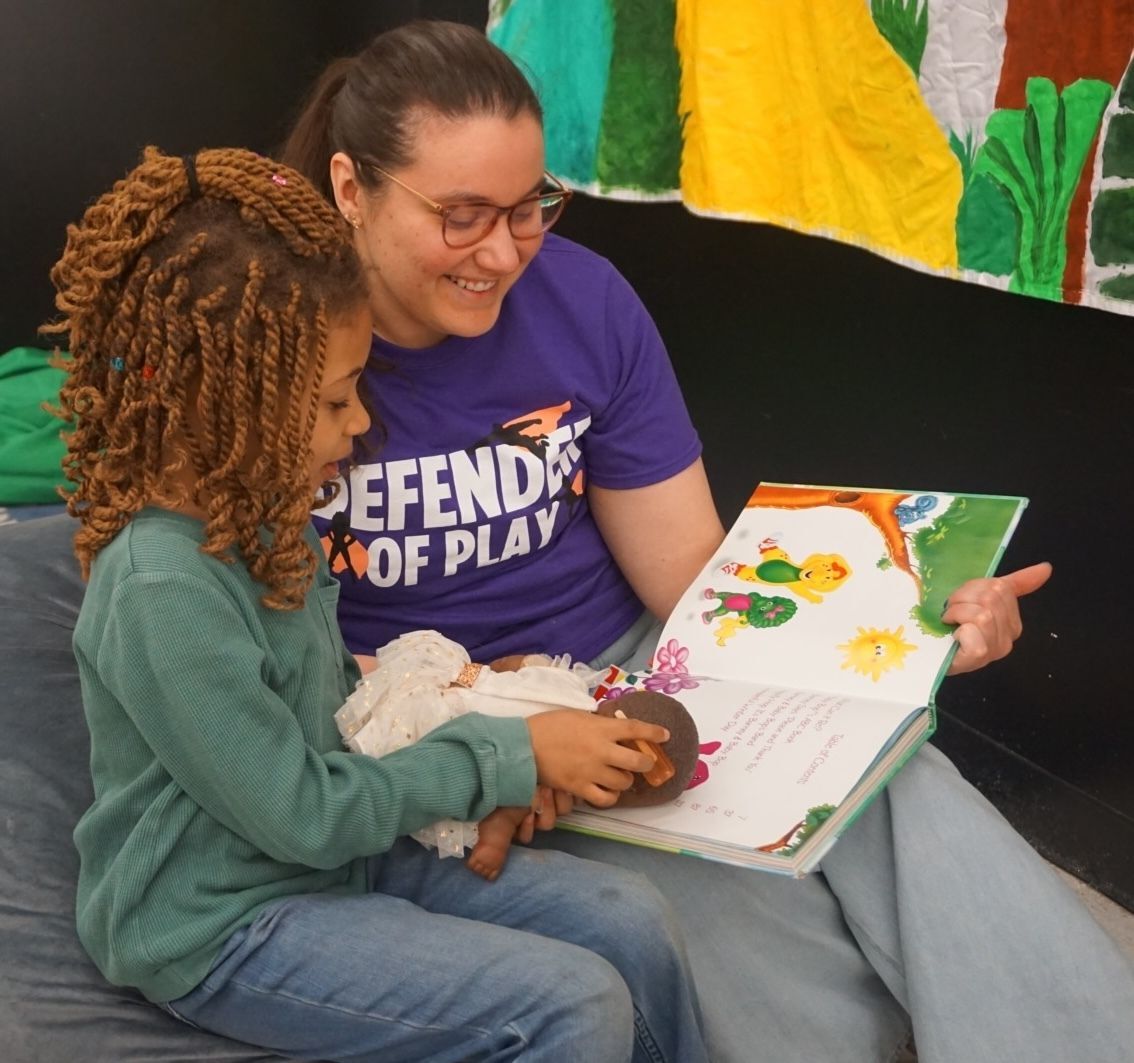
When children first arrive, they have about 20 minutes of free play where they get to engage in their favorite play activities. This often looks like imaginative play in the dress-up corner, reading with a volunteer, or physical play on the indoor slide. There is then a transition activity that will capture their attention and let them release some giggles. This might look like feelings-based Simon Says to build our emotions vocabulary, or Freeze Dance to get our wiggles out.
Next, we begin the core activity – this is when we practice skills related to the focus area of the week. We call them domains: life skills that are proven to build resilience and counteract risk factors. Your job as a volunteer is to help facilitate these goals by asking questions, helping when asked, and providing encouragement.
Let’s break down what that looks like in practice:
Social-Emotional Learning
Social-emotional learning means naming, describing, and understanding one’s feelings and emotions, and learning to play cooperatively with others. Developing a child's social-emotional vocabulary as well as their inter- and intrapersonal skills helps them stay safe, navigate challenges, and seek support from others.
The resilience-building skills associated with social-emotional learning are:
- Self-awareness, feelings identification, and positive self-talk
- Emotional regulation, behavior management, and self-expression
- Sharing, collaborating, and team building
During program, you can ask questions that prompt a child to consider their emotions and employ the resilience-building factors. “How does that make you feel? Do you need to ask for help? What can you do when you feel angry?”
Problem Solving
Problem solving skills help us face adversity and tackle challenging situations with persistence, using creativity, experimentation, and adaptation. Children do not always have a safe, welcoming place for trial and error, but this is an essential part of human development. In order to learn what works, you need to learn what doesn’t. Learning frustration tolerance is an essential life skill. When challenges inevitably arise at school, home, or the playroom, we want to support our children in finding the skills needed to approach them with creativity, stick-to-it-ness, and an open mind.
The resilience-building factors associated with problem solving are:
- Perseverance with a challenge
- Goal setting and problem solving
- Growth mindset
Volunteers like you can help children grow their problem-solving capabilities by encouraging brainstorming, reflection, and patience. You can ask questions about their process while still being a master motivator. “What can we do about that? What is the biggest challenge here? Where should we start first?”
Optimism for the Future
All children deserve to think freely and dream big, and for our children especially, nurturing optimism, exposure to new opportunities, and practicing positive self-talk can help unlock and inspire potential. By learning about new opportunities for future possibilities, children can set goals, take initiative, and self-motivate.
The resilience-building factors associated with optimism for the future are:
- Discovering new interests, skills, and possibilities
- Creativity and self-expression
- Self-concept and feelings of belonging
Your role in the playroom is to support their self-concept, help build their confidence, and celebrate their accomplishments, even in small ways. Ask questions that encourage imagination and curiosity as they explore new concepts introduced. “Tell me about your project! What do you plan to do next? What are you most proud of?”
We're almost ready for the kiddos to arrive! Let’s review the activity we’re doing today:
This week, we are focusing on creative problem solving. Today is "Face Your Fears Day” and we are going to practice being brave. Each child will write down one of their fears on a slip of paper, put it in a hat, and we will randomly read them aloud. Together, we will talk about ways to face these fears and come up with creative approaches to feel better in moments when fear arises. Remember to validate, support, and encourage curiosity about their feelings.
To wrap up, we provide a snack for the kids and sometimes read a book as parents start to trickle in for pick up. Once all the kids are safely on their way, we do a volunteer debrief and share our highs and lows for the day. We make sure to share what went well and to note any red flags in behavior or language and document any incidents that take place.
Thank you so much for coming! We hope you had a great time reconnecting with your childhood self and giving Playtime children an opportunity to explore and express themselves. We can’t wait to see you again soon!
